
 EN
EN
 ar
ar bg
bg hr
hr cs
cs da
da nl
nl fi
fi fr
fr de
de el
el hi
hi it
it ko
ko no
no pl
pl pt
pt ro
ro ru
ru es
es sv
sv tl
tl iw
iw id
id lv
lv lt
lt sr
sr sk
sk sl
sl uk
uk vi
vi et
et hu
hu th
th tr
tr fa
fa ms
ms hy
hy ka
ka ur
ur bn
bn mn
mn ta
ta kk
kk uz
uz ku
ku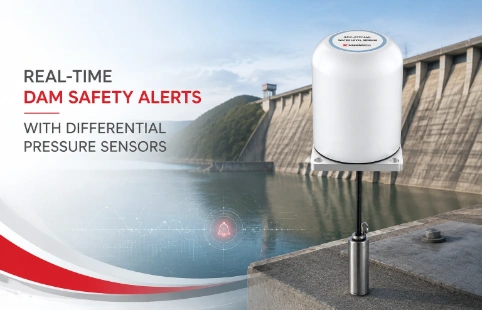
Real-Time Dam Safety Alerts with Differential Pressure Water Level Sensors
Key Takeaways An alert chain needs more than a sensor: define field in...

How to Nail Load Cell Accuracy in Your Monitoring Project
You’ve probably seen specs like 0.03% nonlinearity or 0.02% hysteresis and wondered what they actually mean in the field. I’ve had engineers tell me that a load cell that looked perfect on paper drifted way out of spec once the sun hit it. That’s because accuracy isn’t a single number—it’s a stack of behaviors that play out differently depending on how you mount the sensor, what you’re measuring, and how your data logger handles the signal. Kingmach has been building geotechnical instruments long enough to know that a sensor’s real accuracy is proven over months, not just on a calibration report. So let’s walk through what actually matters, from combined error to temperature swings, and how to make sure your readings don’t let you down when it counts.
Technical Detail
Load cell accuracy sits at the intersection of design, materials, and installation practice. Most datasheets break it into four components: nonlinearity, hysteresis, repeatability, and creep. Nonlinearity describes how much the output curve deviates from a straight line—typically a few hundredths of a percent for a well-built sensor. Hysteresis shows whether the reading depends on the direction of load change, and repeatability tells you if you get the same number every time under identical conditions. On their own, these numbers can look deceptively good, so many manufacturers specify a combined accuracy figure, often in the 0.05–0.1% FS range. Kingmach’s standard load cells achieve a combined error below 0.05% FS, with some custom models reaching 0.03%. That level comes from careful strain gauge bonding, heat-treated alloys, and a digital compensation process that irons out the small inconsistencies that appear during production. Temperature is the biggest real-world troublemaker. A sensor calibrated at 20°C can shift noticeably at -10°C or 50°C. Strain gauge load cells include self-temperature-compensating gauges, but there’s always a residual effect—usually given as a coefficient like ±0.01% FS/°C. For outdoor installations, that adds up fast. Kingmach’s sensors come with temperature compensation data baked into the calibration file, so you can apply software corrections in your data acquisition system. We’ve also seen customers pair our load cells with thermistors to track spot temperatures and adjust readings in real time. That extra step can bring a 1% drift back down to a few tenths of a percent. Compatibility with your reader or logger matters, too. A load cell’s accuracy can be undermined by a noisy power supply or an analog-to-digital converter with low resolution. Kingmach builds sensors with standard mV/V output and 4–20 mA options, and we routinely help integration engineers match excitation voltages and cable lengths to avoid grounding loops. For long cable runs, we recommend using a 6-wire sensing circuit, which cancels out lead resistance errors—something we include on most models as a default. This kind of attention to the whole signal chain is what bridges the gap between a good bench test and a reliable year-long monitoring campaign.
News
Key Takeaways An alert chain needs more than a sensor: define field in...
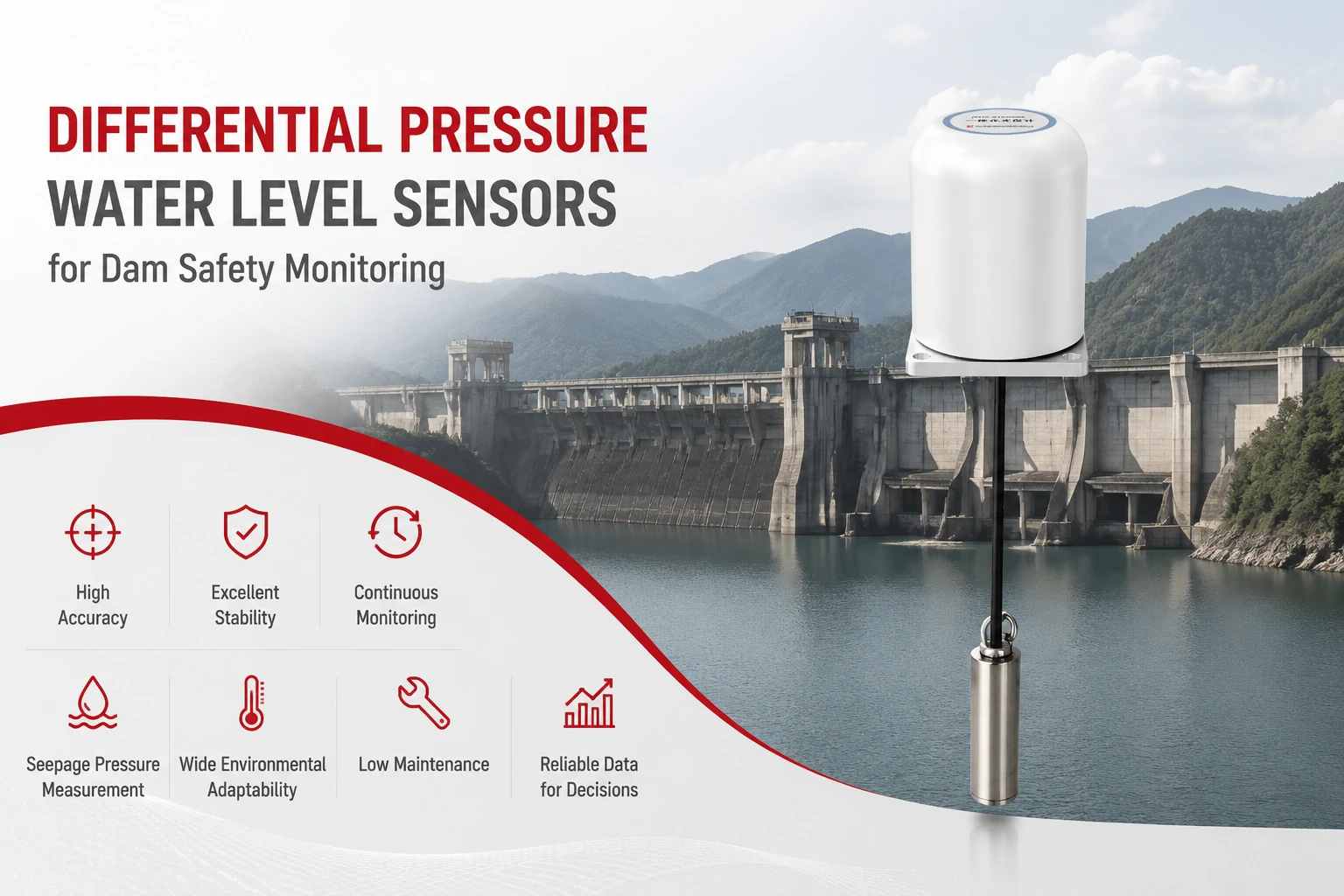
Key Takeaways The strongest fit is usually a confined, submerged, or s...
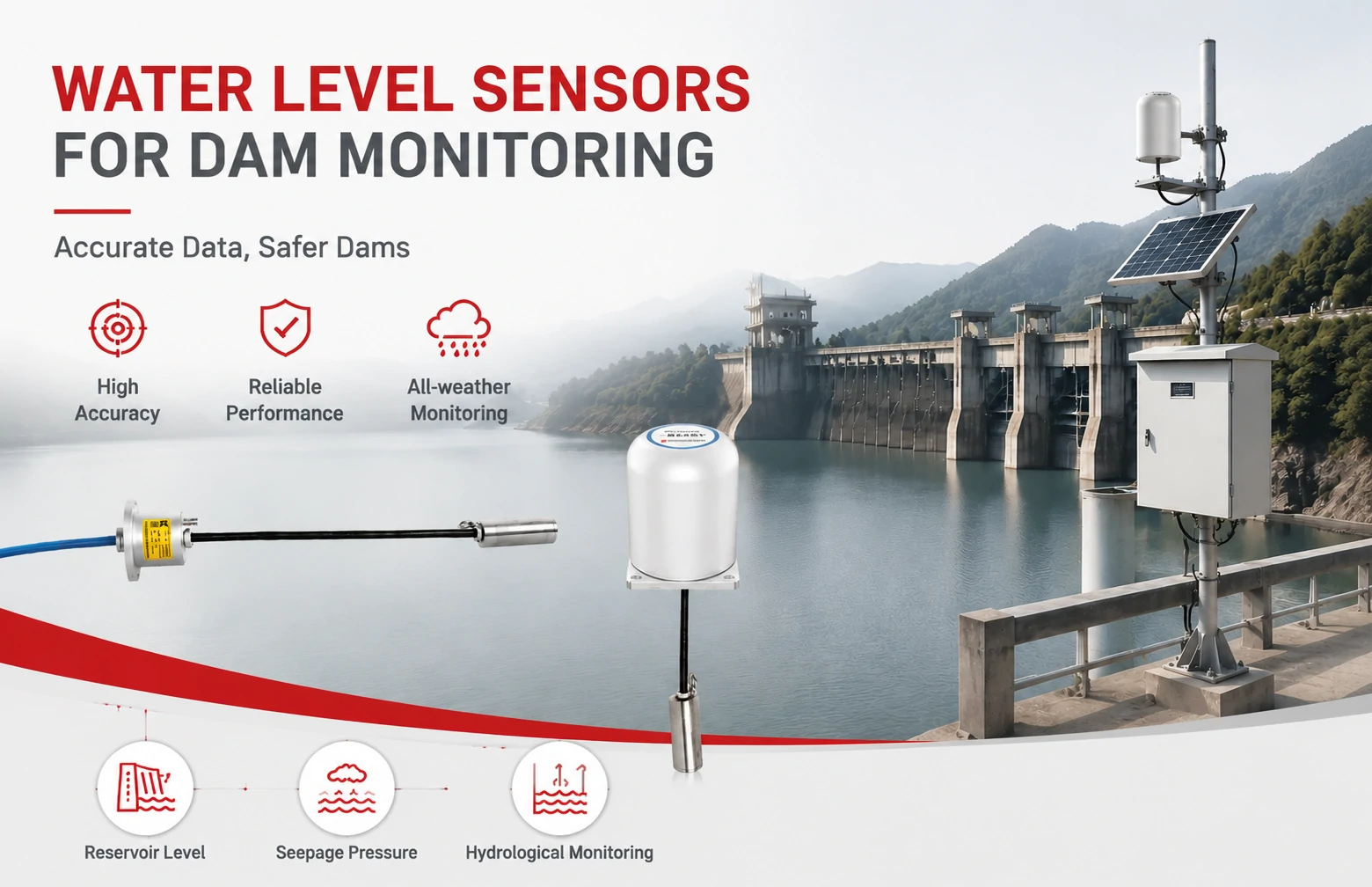
Kingmach Water Level Sensors for Dam Monitoring: A Buyer's Guide to Differential Pre...
Products
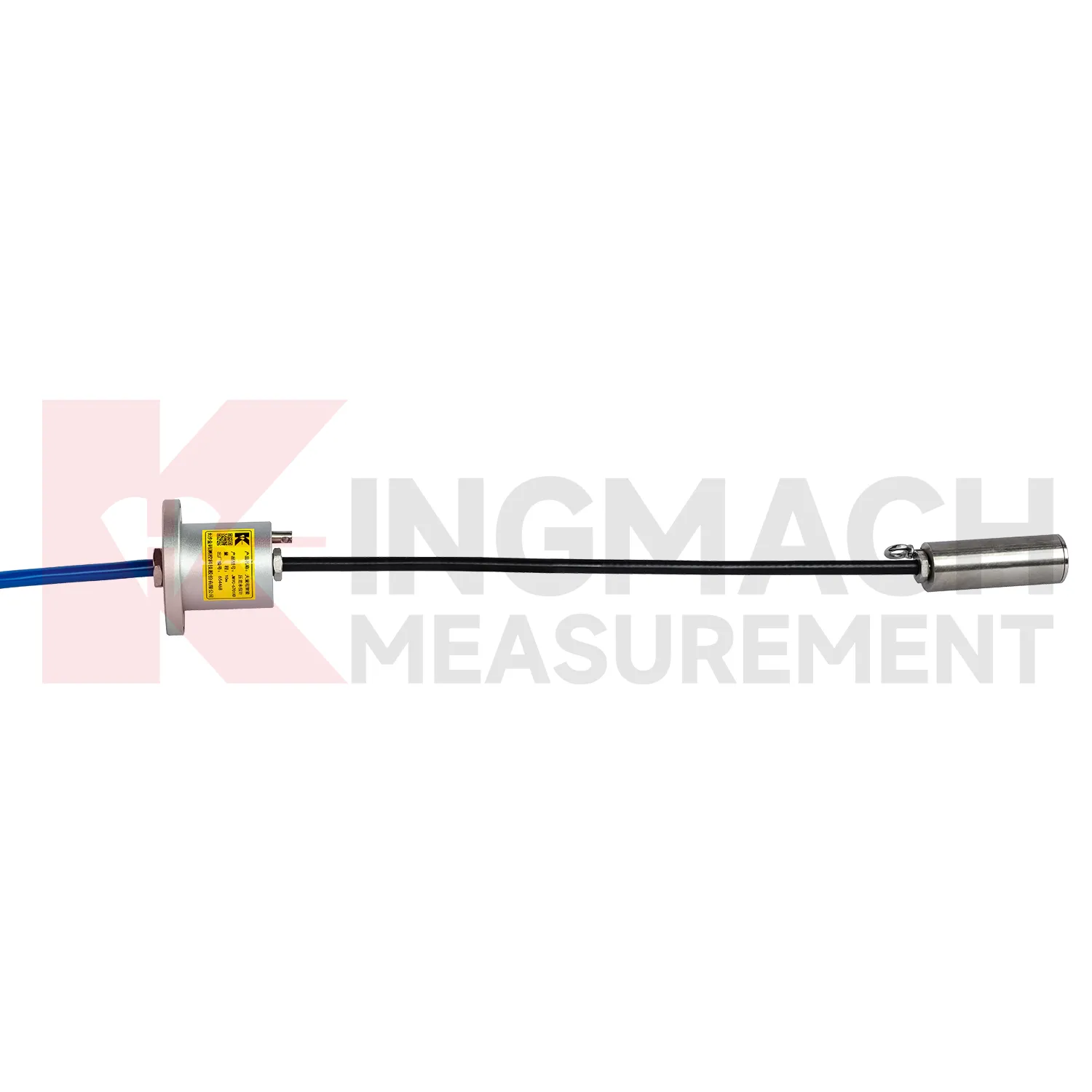
Wide-Range Smart Differential Pressure Water Level Meter JMYC-67XXAD
View Details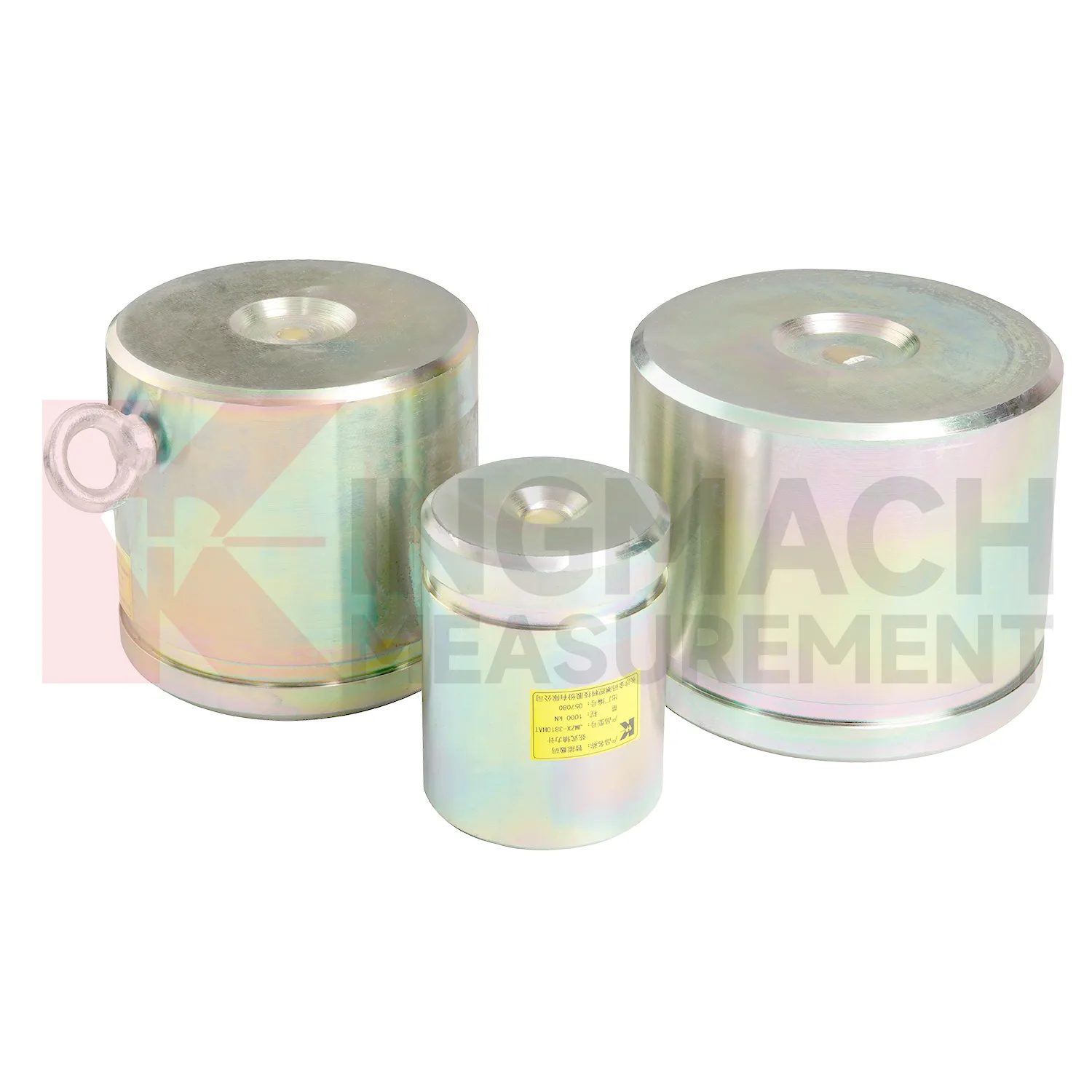
Axial Force Load Meter ( VW & Smart Type)JMZX-38XXHAT
View Details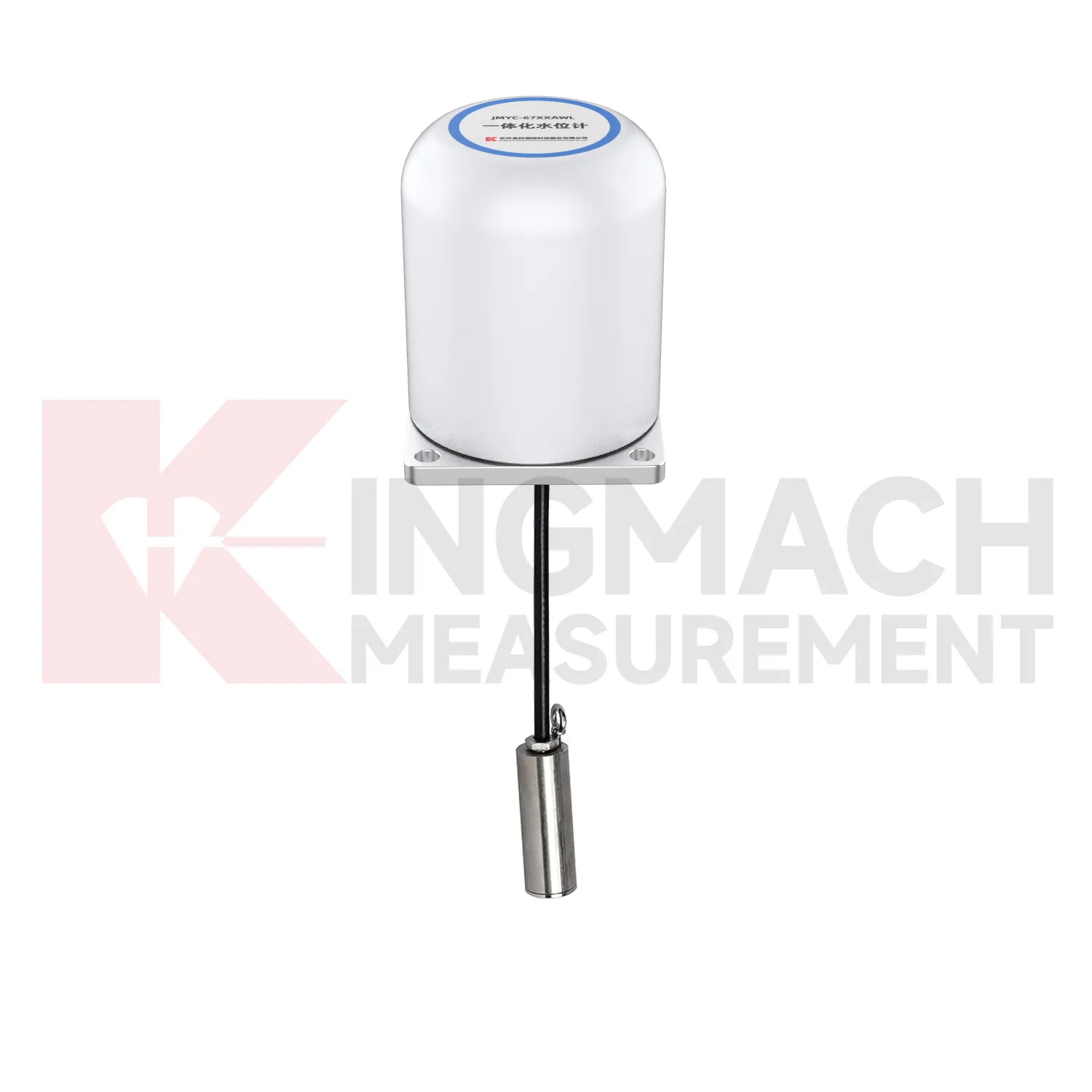
Integrated Wide-Range Differential Pressure Water Level Meter JMYC-67XXAWL
View DetailsFAQ
Resolution is the smallest change your sensor can detect—like being able to spot a 0.1 kg shift on a 1000 kg unit. Accuracy is about how close that reading is to the true value. You can have a high-resolution sensor that’s off by 5% if it wasn’t calibrated well. For most geotechnical jobs, we care about both, but if you’re watching for tiny load changes over time, resolution often drives the selection. Our team usually walks through the actual signal-to-noise ratio you’ll see with your logger, not just the sensor’s best-case spec.
It can be significant—a 30°C swing might push a 0.1% sensor to 0.4% or worse if there’s no compensation. Most strain gauge load cells use temperature-compensating gauges on the elastic element, but they don’t eliminate the effect. Kingmach provides a temperature correction curve with every sensor, so your data system can apply a polynomial compensation. In setups where we’ve integrated thermistor feedback directly into the load cell body, we’ve reduced temperature errors by 70–80% in outdoor installations.
Combined error (often called total accuracy) is the figure you should use when comparing models. It’s the root-sum-square of nonlinearity, hysteresis, and non-repeatability. For instance, a sensor claiming 0.02% nonlinearity but 0.05% hysteresis is really a 0.06% combined sensor. We’d rather quote a single conservative number than bury it in fine print. If you’re evaluating options, ask for the test certificate showing the actual combined error from calibration, not just the datasheet numbers.
Long-term drift depends on the elastic material’s stability and the strain gauge bonding quality. Our sensors use high-grade stainless steel or alloy that’s been through a long aging cycle to settle micro-stresses. After burnout and creep testing, drift is typically under 0.2% per year in stable temperatures. If your application is super sensitive—like foundation settlement—we can also provide a sensor with built-in creep compensation and a baseline calibration reference that you can use to check stability annually.
Share your product type, target capacity, and application requirements. Our team can review the details and recommend a practical next step.
If you are interested in our products or want to become our partner.
Please leave your contact information, our team will contact you as soon as possible.
Mail: [email protected]
Contact Us: +8613808434127
Address: No. 188 Tongzipo West Rd, Changsha, Hunan, China