
 EN
EN
 ar
ar bg
bg hr
hr cs
cs da
da nl
nl fi
fi fr
fr de
de el
el hi
hi it
it ko
ko no
no pl
pl pt
pt ro
ro ru
ru es
es sv
sv tl
tl iw
iw id
id lv
lv lt
lt sr
sr sk
sk sl
sl uk
uk vi
vi et
et hu
hu th
th tr
tr fa
fa ms
ms hy
hy ka
ka ur
ur bn
bn mn
mn ta
ta kk
kk uz
uz ku
ku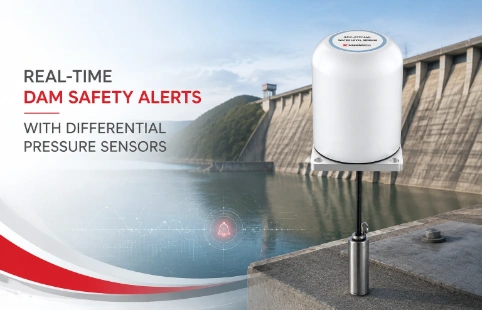
Real-Time Dam Safety Alerts with Differential Pressure Water Level Sensors
Key Takeaways An alert chain needs more than a sensor: define field in...

Understanding Load Cell Sensitivity for Precise Monitoring
Sensitivity is the core parameter that defines how a load cell translates force into an electrical signal. It’s usually quoted in mV/V and tells you the output at full capacity with a set excitation voltage. A higher number doesn’t automatically mean better; what matters is matching that sensitivity to your data logger’s input range. In geotechnical monitoring, where signal can travel long cables and face harsh conditions, getting this right matters. Kingmach, a professional manufacturer with a mid-range positioning, builds load cells with sensitivities that work well with most industrial readouts—commonly around 1 to 2 mV/V. The data sheets often list rated output alongside nonlinearity, hysteresis, and temperature effects, so you can judge the total accuracy, not just one number. For applications like landslide monitoring or structural health, where long-term drift is a concern, sensitivity stability over time and temperature is as important as the initial value. Kingmach instruments are calibrated to provide consistent sensitivity even when used with cable extensions up to several hundred meters, which is crucial for field sites.
Technical Detail
When evaluating load cell sensitivity, the standard industry term is the rated output in millivolts per volt of excitation. For most foil strain gauge load cells, a 2 mV/V output is common, meaning at full scale with a 10V excitation you’ll see 20 mV. Some high-range models or low-capacity cells might offer 1 mV/V or less. At Kingmach, you’ll find load cells with sensitivities tailored to geotechnical uses: vibrating wire load cells often output frequency, not just voltage, and their sensitivity is expressed as frequency change per unit load. The advantage here is immunity to cable resistance changes. For resistive load cells, Kingmach offers both standard and custom sensitivity ranges. Their single-point and S-beam load cells typically feature 2±0.1% mV/V, with a tolerance band that ensures interchangeability in multi-sensor systems. Temperature sensitivity is another key metric—specified as % of rated output per °C. Kingmach load cells generally maintain 0.005% F.S./°C or better, which keeps measurements stable in outdoor settings from -20 to +60°C. Compatibility with readout equipment is straightforward: most of their load cells use a 350-ohm bridge, matching common strain gauge amplifiers. For signal conditioning, a sensitivity of 2 mV/V with 10V excitation yields 20 mV full scale, easily read by standard 0-20 mV or ±20 mV inputs. Beyond raw sensitivity, Kingmach provides compensation for zero balance and nonlinearity, making their load cells plug-and-play with minimal scaling adjustments. Custom sensitivities, like 1.5 mV/V for high-capacity compression cells or 4 mV/V for low-force measurement, are available upon request. This flexibility, combined with robust stainless steel construction and IP68 sealing, supports a wide range of geotechnical projects—from borehole extensometers to tunnel convergence monitoring.
News
Key Takeaways An alert chain needs more than a sensor: define field in...
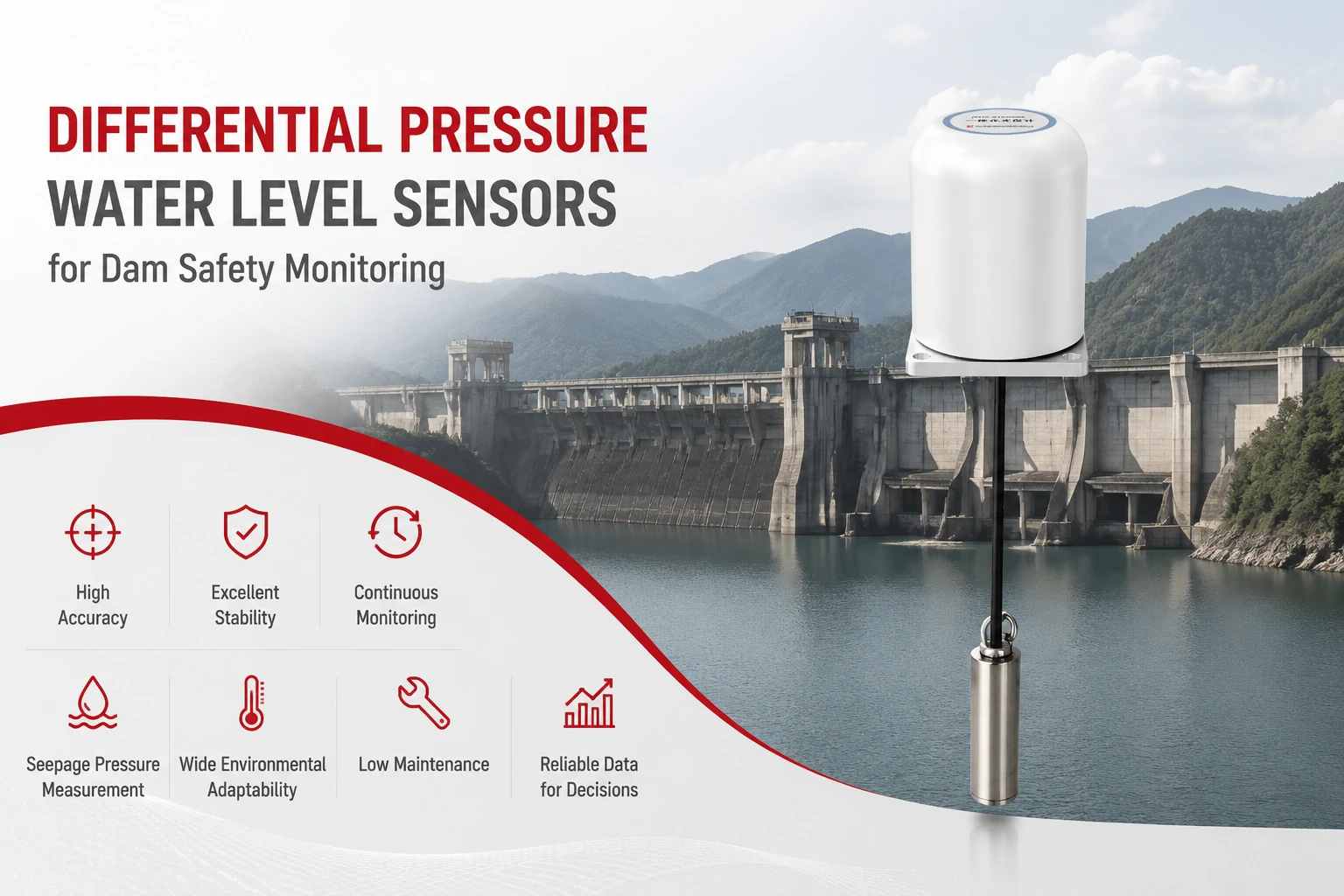
Key Takeaways The strongest fit is usually a confined, submerged, or s...
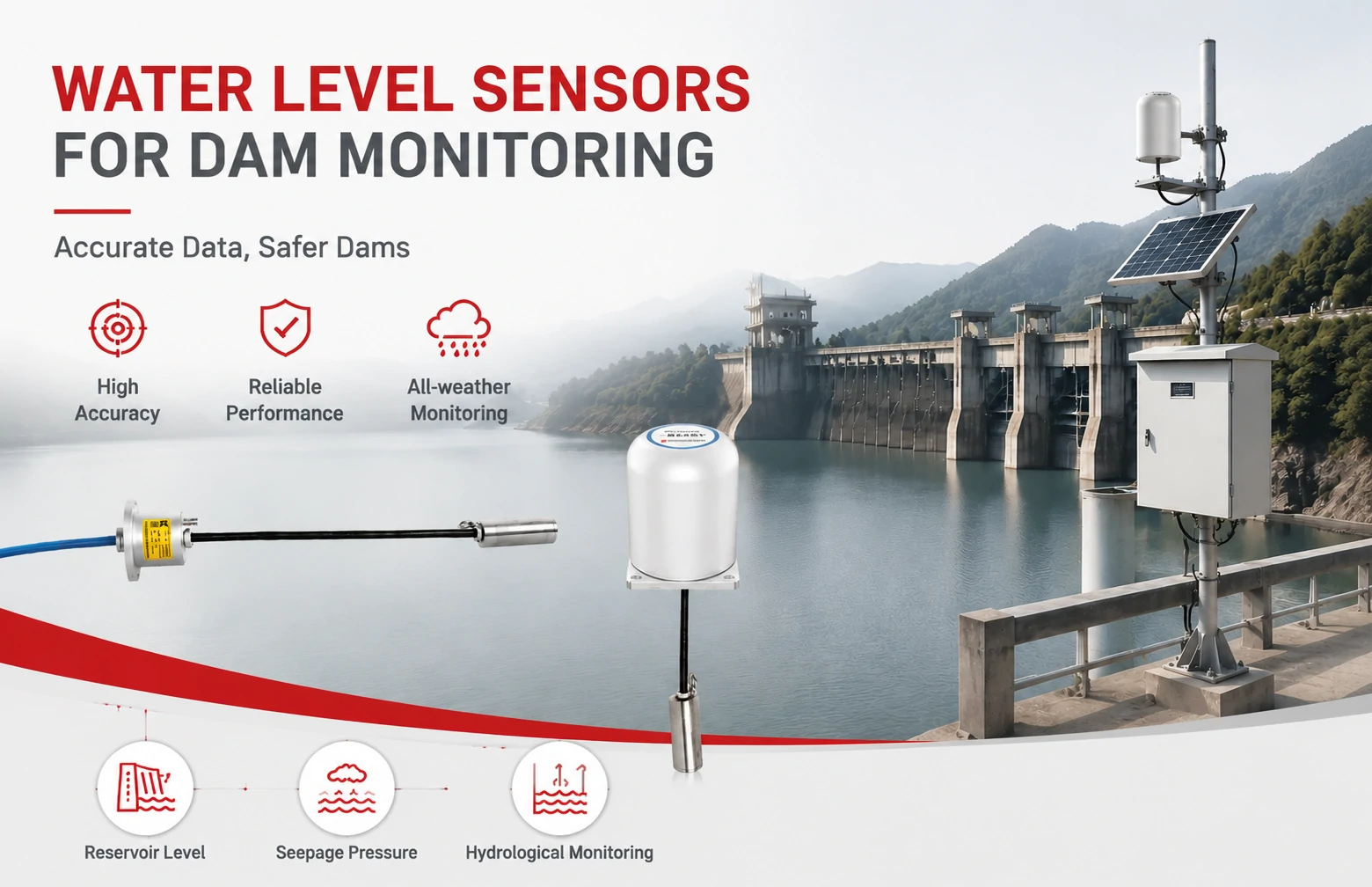
Kingmach Water Level Sensors for Dam Monitoring: A Buyer's Guide to Differential Pre...
Products
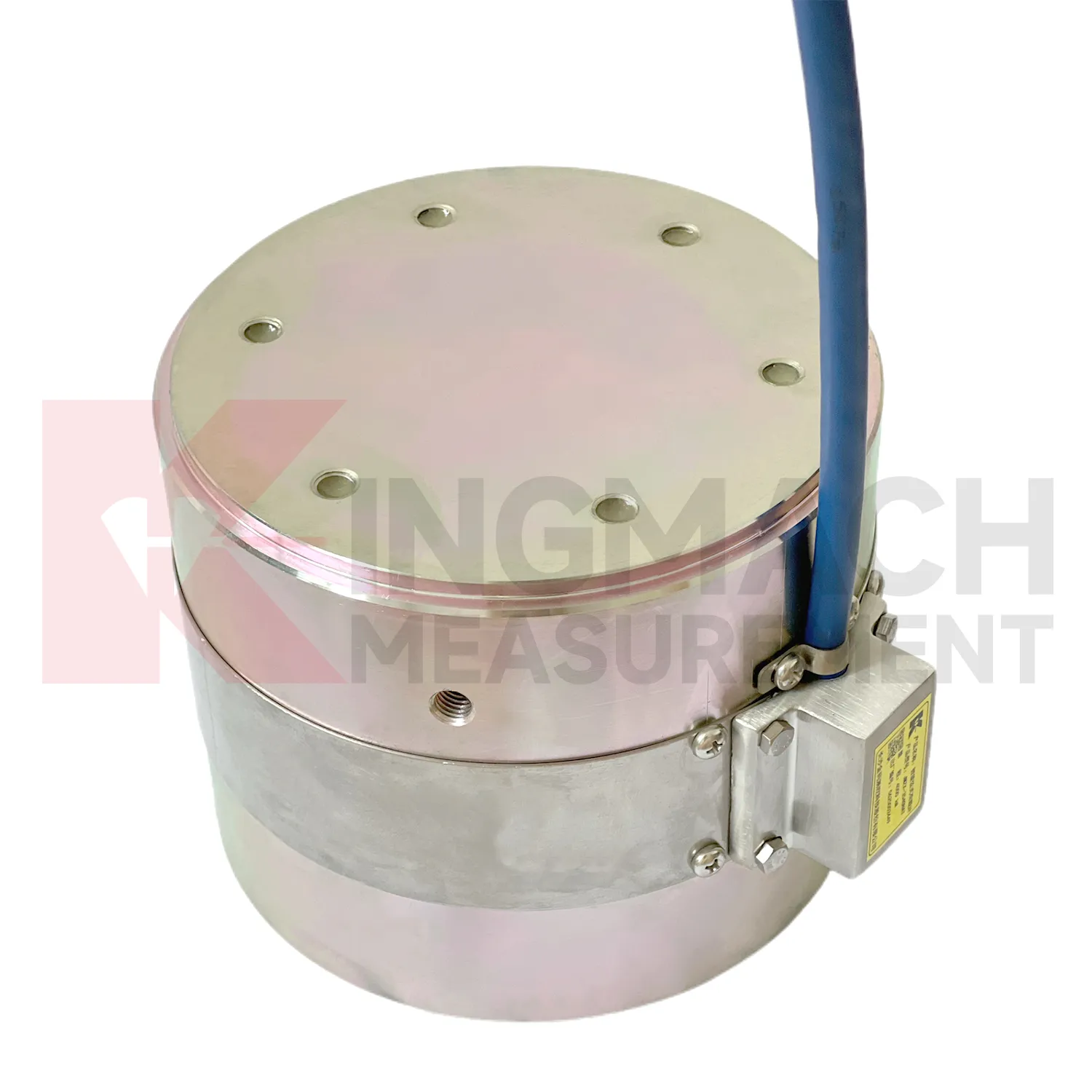
Solid load cell JMZX-34XXHAT、35XXHAT、36XXHAT
View Details
Smart Vibrating Wire PiezometerSmart Piezometers (VW) JMZX-55XXHAT
View Details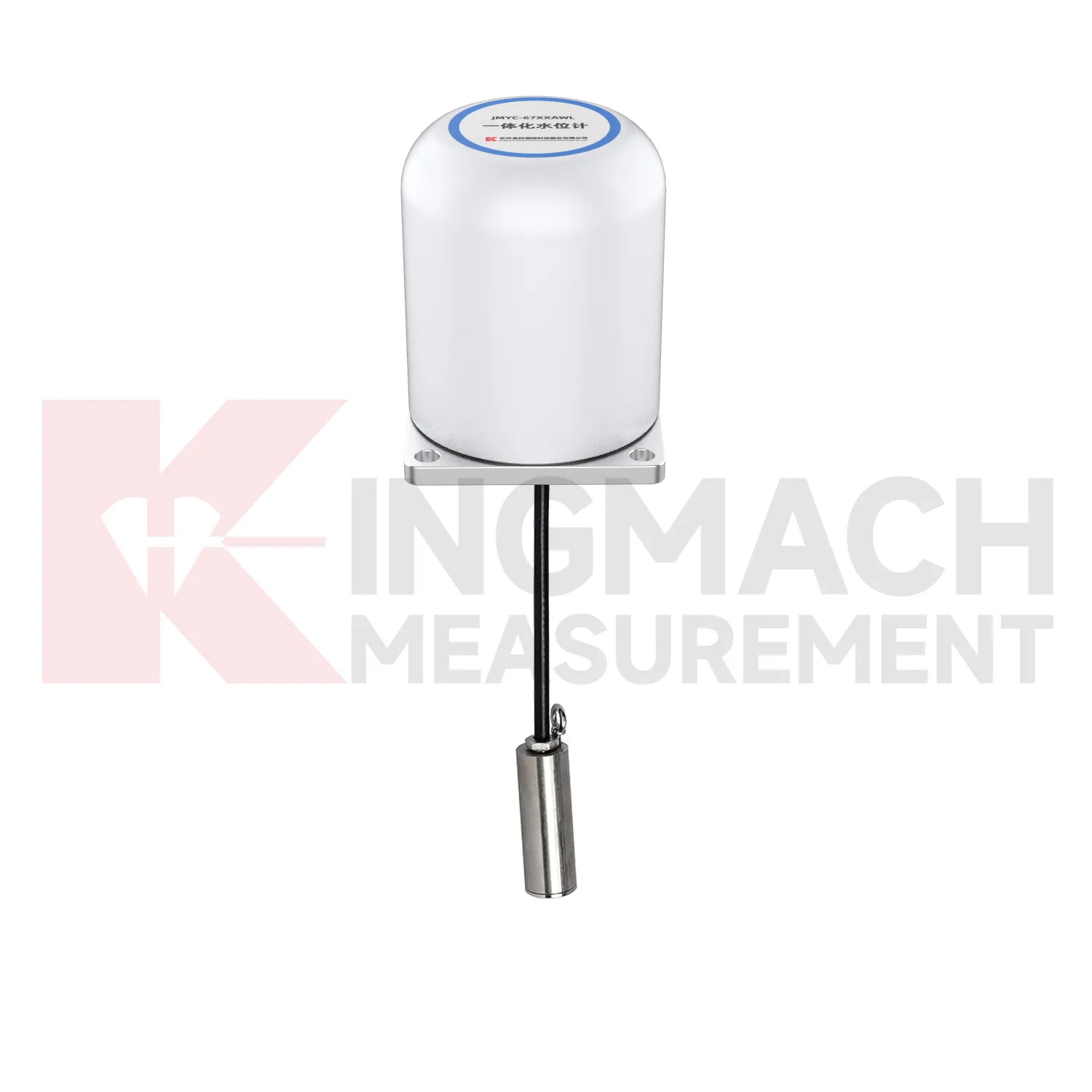
Integrated Wide-Range Differential Pressure Water Level Meter JMYC-67XXAWL
View DetailsFAQ
Sensitivity is how much electrical signal you get for a given load. For example, a 100 kN load cell with 2 mV/V sensitivity and 10V excitation will output 20 mV at full load. That signal has to be read by your logger or transmitter, so matching the range is key. Lower sensitivity might need a better amplifier; higher sensitivity could clip the input if not careful.
Check your data logger’s input range first. If it accepts 0–20 mV full scale, a standard 2 mV/V load cell with 10V excitation fits perfectly. For long cable runs, consider higher excitation or a load cell with frequency output, like vibrating wire, which doesn’t degrade with cable length. Kingmach offers both resistive and vibrating wire options so you can match the site conditions.
Not directly. Accuracy depends on combined errors: nonlinearity, hysteresis, creep, and temperature effects. A high-sensitivity load cell might give a stronger signal, but if it drifts with temperature, your field data suffers. Kingmach’s specifications show all these factors, so you can evaluate total accuracy rather than focusing on sensitivity alone.
Yes, all load cells have a temperature coefficient of sensitivity. For resistive cells, it’s typically ±0.005% of reading per °C. Over years, drift might happen, especially in high-humidity or cyclic loads. Kingmach uses sealed gauges and stress-relieved designs to minimize this. Regular recalibration is still recommended, especially after the first year of installation.
Kingmach’s standard resistive load cells are usually 2 mV/V, but we can customize from 1 mV/V for high-capacity cells to 4 mV/V for low-force applications. For vibrating wire sensors, sensitivity is given in Hz/kN, and we can adjust the wire tension to match your readout frequency range. Contact our technical team with your project details for a specific recommendation.
Share your product type, target capacity, and application requirements. Our team can review the details and recommend a practical next step.
If you are interested in our products or want to become our partner.
Please leave your contact information, our team will contact you as soon as possible.
Mail: [email protected]
Contact Us: +8613808434127
Address: No. 188 Tongzipo West Rd, Changsha, Hunan, China