
 EN
EN
 ar
ar bg
bg hr
hr cs
cs da
da nl
nl fi
fi fr
fr de
de el
el hi
hi it
it ko
ko no
no pl
pl pt
pt ro
ro ru
ru es
es sv
sv tl
tl iw
iw id
id lv
lv lt
lt sr
sr sk
sk sl
sl uk
uk vi
vi et
et hu
hu th
th tr
tr fa
fa ms
ms hy
hy ka
ka ur
ur bn
bn mn
mn ta
ta kk
kk uz
uz ku
ku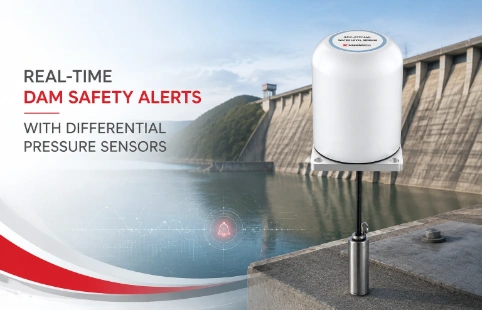
Real-Time Dam Safety Alerts with Differential Pressure Water Level Sensors
Key Takeaways An alert chain needs more than a sensor: define field in...

Wireless Temperature Data Loggers for Field Monitoring
Getting temperature readings from a dozen boreholes on a remote slope used to be a full-day job. Someone had to walk the line, plug in a handheld reader, and hope the wiring was still intact. Kingmach’s wireless temperature data loggers let you capture that data continuously without setting foot on site. They transmit readings from thermistors, thermocouples, or RTDs over kilometers, not meters, so even deep excavations, permafrost zones, or large dam projects stay within reach. The loggers are built around the idea that a monitoring system should work on your schedule, not the other way around. You set the sampling interval, push a configuration file, and let the unit run. Whether you need to track concrete curing temps or groundwater fluctuations, the same hardware adapts via simple sensor swaps. No extra gateways or proprietary cabling required – just a clear path for the radio signal and a browser to check the dashboard.
Technical Detail
Kingmach wireless temperature data loggers strip out the parts of monitoring that often go wrong: exposed wiring, limited channel counts, and fixed sampling rates. Each unit supports up to four external sensors and one internal reference, with the ability to mix sensor types on the same logger. Common inputs include NTC thermistors, Type K or T thermocouples, and Pt100 RTDs, covering most geotechnical and structural temperature ranges. Sampling intervals can be set from one minute to one day, and data is stored locally on non-volatile memory – usually enough for a full year of hourly readings. Transmission happens over 433 MHz or 868/915 MHz (depending on region) with a typical line-of-sight range of 2 to 5 km, or via 4G cellular for unlimited reach. The receiver side connects to a PC or cloud portal, where a basic software package logs and graphs temperatures in real time. For projects that already use third-party SCADA or database systems, loggers speak Modbus RTU over RS-485 at the gateway. Battery power is the default mode, using field-replaceable lithium packs that hold up through multiple seasons. Optional solar panels or DC inputs are available for long-term stations. Enclosures are IP66 or IP67, tested in outdoor installations from -30°C to 70°C. Kingmach can also adjust cable lengths, probe diameters, and logging firmware for unusual profiles. Technical documentation comes with each order, and the support team helps with site-specific radio surveys if transmission range is a concern.
News
Key Takeaways An alert chain needs more than a sensor: define field in...
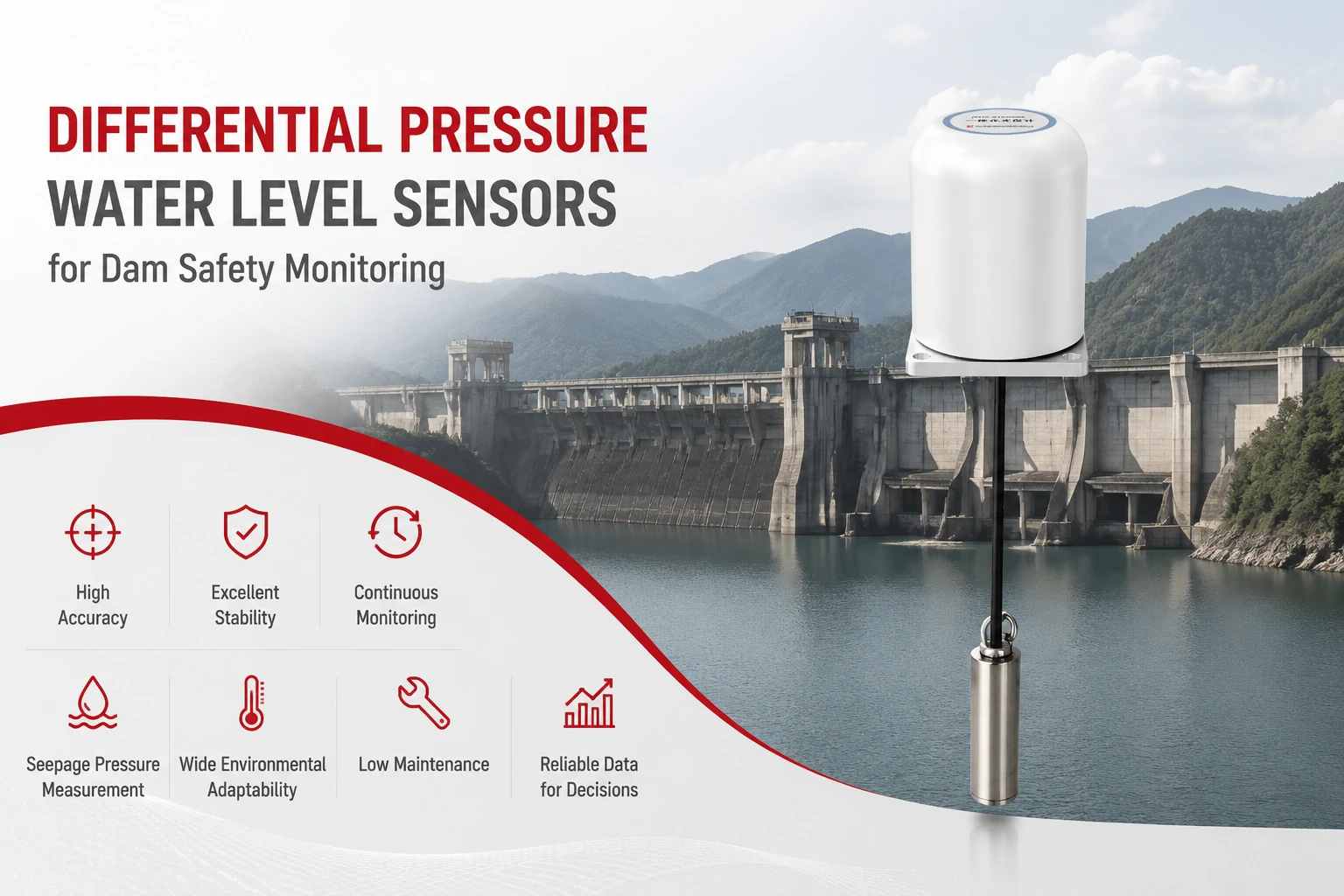
Key Takeaways The strongest fit is usually a confined, submerged, or s...
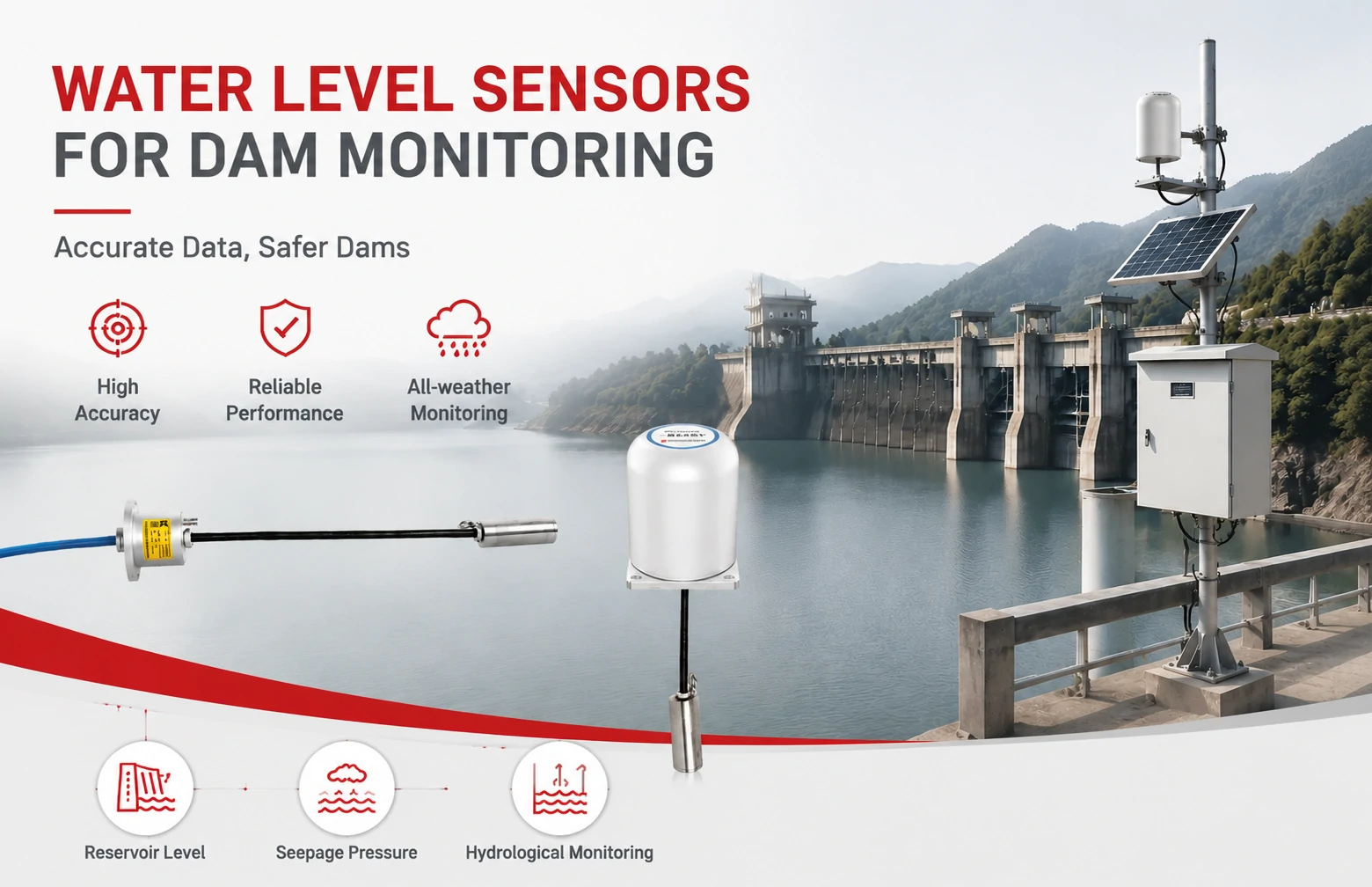
Kingmach Water Level Sensors for Dam Monitoring: A Buyer's Guide to Differential Pre...
Products
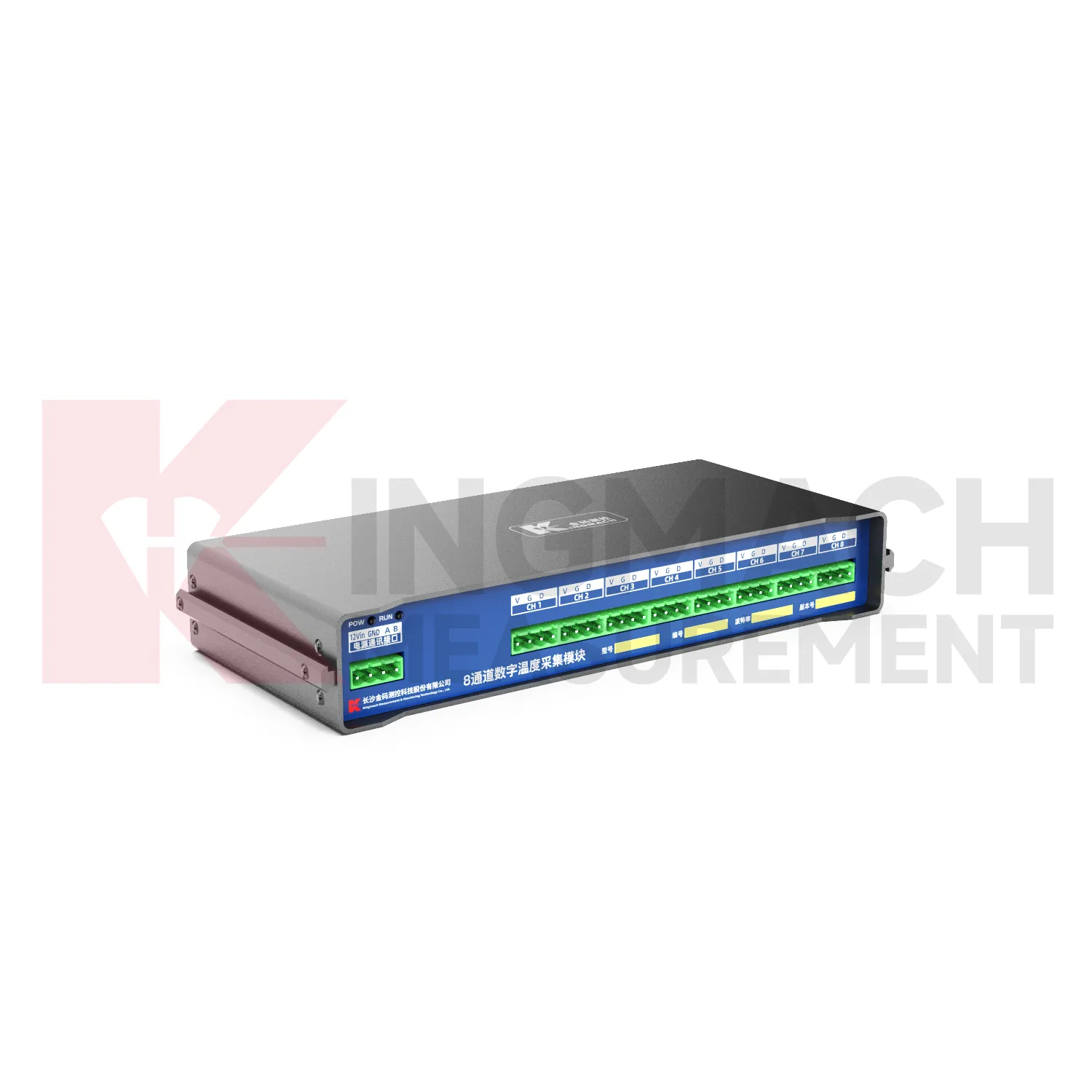
8-Channel Digital Temperature Acquisition ModuleJMWT-8DTH
View Details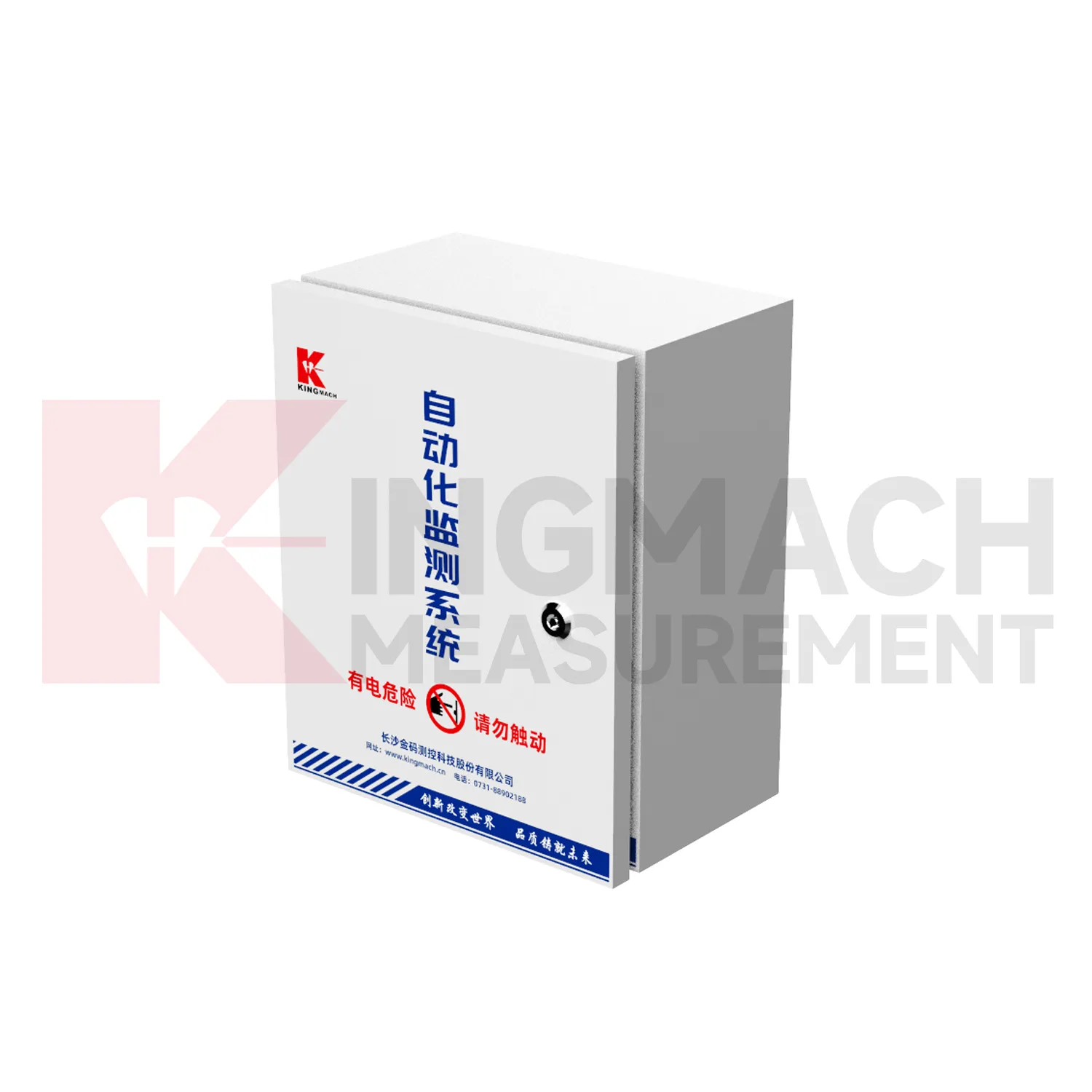
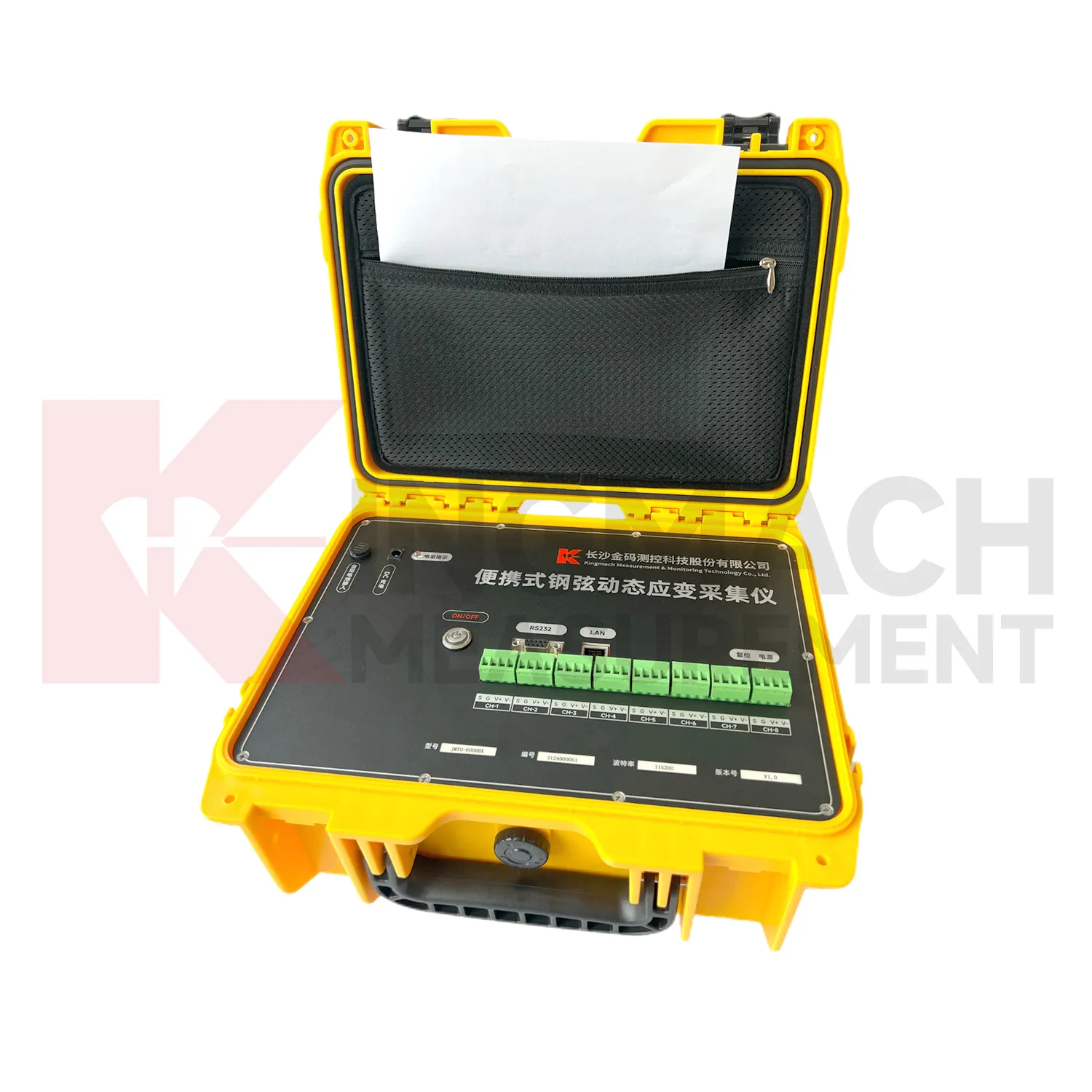
Portable Vibrating Wire Dynamic Strain Acquisition Readout JMYD-6008BX
View DetailsFAQ
Most common types: NTC thermistors, Type K, J, T, or E thermocouples, and Pt100 RTDs. You can mix different sensors on the same 4-channel unit. If you have something unusual, the input module can be custom-configured at the factory.
In open terrain with a clear line of sight, the 433 MHz or 868/915 MHz radios typically cover 2 to 5 km. With obstacles like buildings or dense trees, expect less. A site survey before installation helps us recommend antenna placements. For unlimited range, the 4G cellular version works anywhere with mobile coverage.
Each system includes one receiver or cloud gateway. The bundled PC software handles real-time display and export to CSV. If you already run a SCADA or lab system, the gateway outputs Modbus RTU over RS-485 or TCP/IP so you can pull data directly.
At -20°C with one reading per hour, lithium D-cell packs usually last 12 to 18 months. More frequent sampling or extreme cold shortens that. We provide battery drain estimates with each quote based on your intended interval and temperature range. Solar panels can supplement power if needed.
Yes. If you need event-based triggering, high-frequency bursts, or custom calculation channels, Kingmach’s engineering team can modify the firmware. This is common for research projects or installations with very specific thermal monitoring requirements.
Share your product type, target capacity, and application requirements. Our team can review the details and recommend a practical next step.
If you are interested in our products or want to become our partner.
Please leave your contact information, our team will contact you as soon as possible.
Mail: [email protected]
Contact Us: +8613808434127
Address: No. 188 Tongzipo West Rd, Changsha, Hunan, China